
When buying or renting a property in Turkey, especially in Istanbul, you shouldn’t look only at the purchase or rental price when assessing an apartment. One of the monthly costs you may face after moving in or purchasing a property is the aidat in Turkey—a fee sometimes referred to in Persian as “Ayedat” or simply as the building’s maintenance fee. The amount of aidat can vary significantly depending on the type of building, the number and quality of facilities, social and security services, the number of units, and even how the residential complex is managed. That’s why the monthly maintenance fee for a standard apartment can be completely different from that of a luxury residence in Istanbul.

But what exactly does the aidat cover? If we don’t use the swimming pool, fitness center, or other facilities in the complex, do we still have to pay the aidat? In this article, we’ll answer all these questions, starting with what aidat means and the costs that make up this fee, and then looking at how it is calculated, the difference between aidat and advance payments, the responsibilities of property owners and tenants, and the consequences of failing to pay the building’s maintenance fee. Finally, we’ll provide you with a practical checklist so that if you’re planning to buy or rent a property in Turkey or Istanbul, you’ll know exactly what you’re paying the building’s aidat for before making a deal.
What Is Aidat in Turkey?
Aidat, sometimes written as “Ayedat” in Persian, is the Turkish word Aidat, meaning a monthly maintenance fee. In Turkey, it is used for regular and periodic payments. If you’re looking to buy or rent an apartment in Turkey, you’ll likely come across terms such as Apartman Aidatı or Site Aidatı. These terms refer to the amount paid by the property owner or resident to cover the shared expenses of a building or residential complex—what we commonly call a building maintenance fee. In the formal definition of the Turkish language, Aidat also refers to an amount paid regularly in return for a service.

The word Aidat itself also has an interesting history. It is not originally a Turkish word and comes from the Arabic term عائدات (ʿāʾidāt / ʿāʾidāt), which entered Ottoman Turkish and later modern Turkish. In Arabic, “ʿāʾidāt” referred to income, returns, or something generated from capital or an activity. It later developed its modern meaning in Turkish as a “regular payment or membership fee.” In modern Turkish, the word is written as Aidat, while “Ayidat” is an incorrect form.
So, when you hear someone in Istanbul or another Turkish city ask “Bu dairenin aidatı ne kadar?”, they mean, “How much is the maintenance fee for this apartment?” Of course, aidat is not simply a fee for cleaning the hallways. Depending on the type of building, it can cover security services, cleaning, elevators, landscaped areas, swimming pools, fitness centers, maintenance and repair of building systems, and many other expenses. That’s why understanding aidat and how building maintenance fees are calculated is particularly important for anyone planning to buy property in Turkey. We’ll take a closer look at these topics in the following sections.
What Costs Does Aidat Cover?
Now that we know aidat is essentially the building maintenance fee in Turkey, let’s look at exactly what residents and property owners are paying for. Aidat is collected to cover expenses related to the shared areas and facilities of a building or residential complex. Depending on the type of property, services, and facilities available to residents, the amount can vary considerably. For example, the maintenance fee for a standard apartment building with a few units is naturally very different from that of a large residential complex or a luxury residence in Istanbul. Official Turkish sources also mention expenses such as electricity and water for common areas, elevator maintenance, and security of residential complexes as examples of building operating costs.
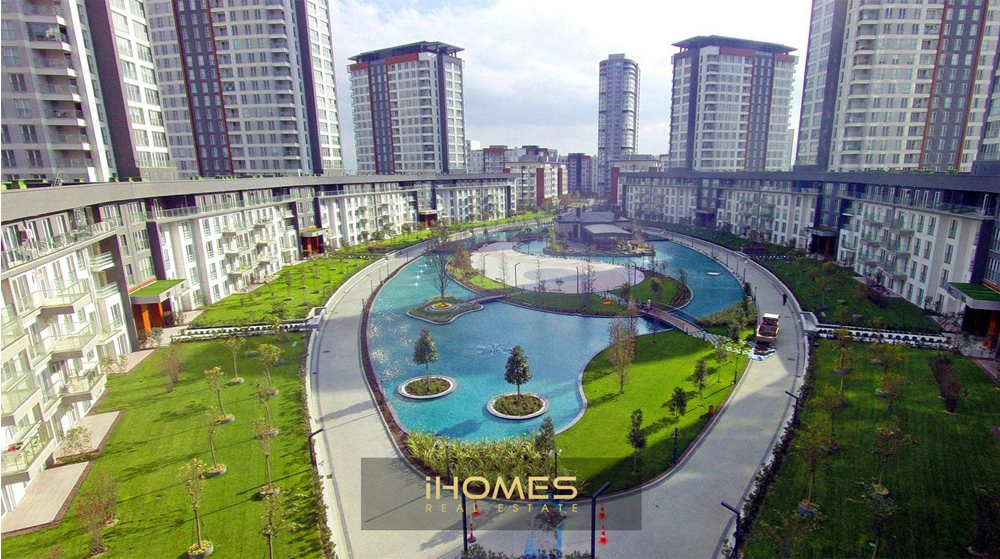
In general, aidat can cover a wide range of expenses, with the most common ones including:
- Building and common-area cleaning: Cleaning hallways, lobbies, parking areas, entrances, and other shared spaces.
- Security and security personnel: Salaries of security guards, access control systems, CCTV cameras, and other security equipment.
- Elevators: Routine servicing, repairs, and maintenance of elevators.
- Landscaped green areas: Maintenance of gardens, outdoor areas, trees, and other landscaped spaces within the complex.
- Electricity and water for common areas: Lighting in hallways, parking areas, and lobbies, as well as water consumption in shared spaces.
- Building staff salaries: Costs related to the building manager, caretaker, security guards, gardeners, and other personnel involved in managing and maintaining the complex.
- Swimming pool and sauna: In complexes with these facilities, maintenance, cleaning, and equipment servicing may be included in the monthly fee.
- Fitness center and sports facilities: Maintenance of fitness equipment, sports halls, and other similar facilities.
- Building systems and technical equipment: Servicing and maintenance of heating and cooling systems, pumps, generators, and other shared equipment.
- Repairs and maintenance of common areas: Expenses such as repairs to parking areas, lobbies, hallways, entrance doors, and other areas used by all property owners.
- Management and administrative expenses: Costs related to managing and operating the residential complex and handling building-related administrative matters.
Of course, aidat does not necessarily cover exactly the same expenses in every building in Turkey. Generally, the more facilities and services a residential complex offers, the higher its maintenance costs tend to be. For example, a residence in Istanbul with a lobby, 24-hour security, a swimming pool, fitness center, landscaped green areas, and a well-equipped parking facility will naturally have higher maintenance fees than a standard apartment building with limited facilities.

On the other hand, it’s important to distinguish between regular aidat expenses and costs related to major repairs or special expenditures. Not every payment that may be requested from a property owner necessarily counts as the “regular monthly maintenance fee.” Whether a particular expense is collected through aidat and how it is divided among the units depends on the type of expense, the rules of the residential complex, and the legal structure governing the building’s management.
Where Does Aidat Come From and How Is It Calculated?
You might think the building manager simply comes up with a number every month and says, “The aidat is 5,000 lira this month!” 😄 But it’s not quite that arbitrary. In Turkey, there is an important concept known as İşletme Projesi. Simply put, it can be described as the building’s financial plan or budget. This plan sets out the building’s estimated annual income and expenses and determines each unit’s share of those costs. Under Article 37 of the Condominium Ownership Law, this plan must be approved by the condominium owners’ board (Kat Malikleri Kurulu).
The building manager or management company is responsible for implementing this plan. In other words, they manage and collect the building’s expenses and operate according to the decisions of the owners’ board and the building’s financial plan. The law also requires the manager to keep records and documents related to the management of the building and provide owners with an account of its income and expenses.
How Much Is the Monthly Aidat in Istanbul?
If we want to have a rough figure, according to a 2025 report by Apsiyon, which analyzed data from more than 22,000 buildings and over 1.5 million residential units, the average aidat in Istanbul was around 6,629 lira per month. However, this figure covers different types of apartments, residential complexes, and residences and should not be considered a fixed or official rate for all buildings in Istanbul.
In practice, building maintenance fees in 2026 can vary significantly depending on the type of property:
| Building Type | Approximate Monthly Aidat |
|---|---|
| Basic apartment with limited facilities | Approximately 1,000 to 3,000 lira |
| Modern apartment or mid-range residential complex | Approximately 2,500 to 6,000 lira |
| Large residential complex with security, parking, and social facilities | Approximately 4,000 to 10,000 lira or more |
| Luxury residence and high-end projects with extensive facilities | 10,000 lira and above |
These ranges are not official rates and are only intended to give you an initial idea of aidat costs in Istanbul. In a luxury project or a building with extensive services, the monthly aidat can reach tens of thousands of lira.
In some places, you may be asked to pay an amount in advance as a guarantee against unpaid aidat. A landlord may also request this type of guarantee from a tenant because if the tenant fails to pay the building’s maintenance fee, the responsibility may ultimately fall on the property owner.
Is Aidat in Turkey Paid by the Owner or the Tenant?
This is an important question for anyone planning to rent or buy property in Turkey, because not every payment collected under the name of aidat or building maintenance fee is necessarily the tenant’s responsibility. To understand who is responsible for what, we need to distinguish between the building’s regular operating expenses and major expenses related to the property itself.
Tenant Expenses in Turkey
As a general rule, expenses related to the day-to-day use and operation of the building are usually the tenant’s responsibility. These are costs associated with living in the property and using shared facilities, rather than major changes or improvements to the property itself. Examples include staff salaries, cleaning and security, and the regular maintenance of elevators, swimming pools, sports facilities, landscaped areas, and other services related to everyday use.
Owner Expenses in Turkey
By contrast, expenses related to the property itself, the building’s structure, or permanent improvements that increase its value are generally the owner’s responsibility. These costs are mainly related to major repairs, replacement of essential equipment, or capital improvements to the building.
For example:
- Major repairs to the roof or building façade
- Complete replacement of the elevator or its main equipment
- Major replacement or renovation of building systems and installations
- Costs related to major renovations and repairs of common areas
- Capital expenditures and the purchase of new permanent equipment
- Expenses incurred to increase the property’s value or make major improvements to it
So, for example, if the management of a residential complex in Istanbul decides to completely replace the elevators or carry out major renovations to the building façade, these expenses would generally fall under the property owner’s responsibilities rather than the tenant’s regular operating costs.
In general, if a tenant fails to pay the aidat for any reason, the amount can ultimately be collected from the property owner.
When and How Is Aidat Paid?
Aidat in Turkey is usually paid monthly, with the amount and payment deadline determined by the building or residential complex management. Residents can pay the building maintenance fee through the payment method specified by the management, usually by transferring the money to the bank account of the residential complex or its management.
It’s a good idea to keep your payment receipt as well, so you have proof of payment in case any dispute arises.
The exact payment date and method can vary between apartment buildings, residential complexes, and residences. Therefore, when buying or renting a property in Turkey, it’s best to ask the management about the aidat amount, payment deadline, and payment method.
What Happens If We Don’t Pay Aidat?
Failing to pay aidat in Turkey is not something to take lightly. Under Turkish law, the building management can take legal action to collect unpaid fees. According to Article 20 of the Condominium Ownership Law in Turkey, if a property owner fails to pay their share of the common expenses, the building manager or even other property owners can take legal action or initiate enforcement proceedings against them.
More importantly, the law provides for a 5% monthly late-payment penalty. This means the debt doesn’t simply remain at the original amount; if the delay continues, additional charges can accumulate.
Ultimately, the property owner remains primarily responsible for the payment of aidat. If a tenant fails to pay, the outstanding amount can eventually be collected from the owner. That’s why building maintenance fees are an important issue when arranging a property purchase in Turkey, and you should ask your real estate agent in Istanbul to clearly explain how aidat is handled before signing the contract, as unpaid fees can become a bigger issue over time.
Aidat and Vacant Properties in Turkey
Leaving a property vacant in Turkey does not mean the owner is exempt from paying aidat or building maintenance fees. If your apartment, house, or unit remains empty for a period of time and nobody lives there, the costs of maintaining and managing the building’s common areas still exist. Therefore, aidat for a vacant property still needs to be paid, and the property owner is responsible for paying it. Expenses such as security, cleaning, elevator maintenance, landscaped areas, building systems, and other shared costs do not disappear simply because one unit is unoccupied.
This is particularly important for foreign property owners who have purchased a home in Turkey, especially Istanbul, as an investment or for future use. Even if you don’t stay in Turkey for several months or longer and your property remains completely vacant, you shouldn’t assume that the building maintenance fee will stop. Therefore, when calculating the cost of owning and maintaining a property in Turkey, you should also factor in the aidat for the months when the property is vacant.
What If We Don’t Use the Swimming Pool or Fitness Center?
One common question is whether you still have to pay aidat if you don’t use facilities such as the swimming pool, fitness center, sauna, or other shared amenities. The general answer is yes. Simply choosing not to use a shared facility does not automatically exempt a property owner or tenant from paying their share of the related common expenses.

For example, imagine a residence in Istanbul with a swimming pool and fitness center, but you never use either facility. The costs of maintaining, cleaning, servicing, and operating these areas still exist and are considered part of the complex’s common expenses. Turkish condominium law generally follows the same principle: not using a common area by itself is not a reason to be exempt from paying the expenses associated with it.
So whether a property is vacant or a resident chooses not to use the facilities of the complex, the aidat does not automatically disappear. However, the type of expense and the way it is allocated are important, and not all expenses are necessarily divided among units in the same way.
What Is the Difference in Aidat Between an Apartment, Site, and Residence?
Aidat in Turkey is not a fixed, predetermined amount, and it can vary significantly from one building to another. Whether a property is located in a standard apartment building, a Site, or a residence can have a major impact on the building maintenance fee. This is because the number and quality of facilities, services, staff, security, landscaped areas, swimming pools, fitness centers, parking facilities, and even the property’s location in Istanbul or other Turkish cities can all be different.
As a result, the aidat for a simple apartment may be relatively low, while the fee for a large Site or luxury residence can be considerably higher. So when buying or renting a home in Turkey, simply asking how much the aidat is isn’t enough; you should also find out exactly what services and facilities are included in the fee.
You can also read our post on the difference between Sites, residences, studios, and apartments in Turkey for more information.
Is Aidat Calculated Based on the Size of the Property?
Not necessarily. One common misconception is that the aidat in Turkey is calculated simply by multiplying the size of the property by a fixed rate. In reality, the calculation can depend on the type of expense, the owner’s share of the property, known as Arsa Payı, the rules of the residential complex, and the building’s budget. Under Turkey’s Condominium Ownership Law, some common expenses are divided equally among the units, while others are allocated according to the owner’s Arsa Payı. Therefore, the size of the property can have an impact in some cases, but it is not the only factor used to determine the building maintenance fee.
For example, let’s assume a 10-unit residential complex in Istanbul has 100,000 lira in monthly operating expenses. If 40,000 lira of this amount is spent on security guards and other staff, this portion may be divided equally among the units, meaning each unit would pay 4,000 lira. But if the remaining 60,000 lira is an expense that, under the law, must be allocated according to each owner’s share of the property or Arsa Payı, the amount payable by each unit would not necessarily be equal.
So, if we have an 80-square-meter apartment and a 160-square-meter apartment, we can’t simply assume that the second unit’s aidat must be twice as much because it is twice the size. Its share may be higher, but we first need to see how the specific expense is allocated.
Is Aidat Higher in Istanbul Than in Other Turkish Cities?
In general, aidat in Istanbul can be higher than in many other cities in Turkey, but this is not a fixed rule. Building maintenance fees depend on much more than the city itself. The type of property, available facilities, number of staff, size of common areas, level of services, and even the neighborhood can all affect the cost. For example, a luxury residence in Istanbul with a swimming pool, fitness center, 24-hour security, and various services will naturally have a higher aidat than a basic apartment. In fact, even two buildings in the same neighborhood can have a significant difference in their maintenance fees. A luxury residence in an otherwise ordinary city can certainly have a higher aidat than a “normal apartment” in Istanbul.

Aidat can also be high in cities such as Ankara, Izmir, Bursa, and Antalya, especially in large residential projects with extensive facilities. So, it’s not accurate to say that “aidat is always higher in Istanbul.” When buying or renting property in Turkey, it’s better to check the aidat for the specific project and understand exactly what services you receive in return. Even within Istanbul, the differences can be significant. According to a study covering more than 21,000 apartment buildings, Sites, and residences, average aidat varied considerably between different areas of Istanbul, with much of the difference linked to the level of services and facilities.
What Is the Difference Between Aidat and Avans in Turkey?
Simply put, aidat is the building’s regular operating and maintenance fee, which is generally the tenant’s responsibility. It covers expenses such as cleaning, security, electricity for common areas, elevator maintenance, and other routine building costs.
Avans, on the other hand, generally refers to an amount collected to cover future and anticipated building expenses and is usually collected from the property owner. However, if the owner and tenant have agreed on a different arrangement for paying this amount in their contract or through a separate agreement, that agreement may determine who is responsible for the payment.
A High Aidat Isn’t Always a Bad Thing!
When you see that the aidat in Turkey is high, it doesn’t necessarily mean you’re paying more than you should. Sometimes, a higher aidat simply means more services, better facilities, and a higher standard of living. 24-hour security, swimming pools, fitness centers, landscaped green areas, regular cleaning, and professional building maintenance all come with costs.

There’s also a psychological side to this. When you live in a building that is clean, secure, and well-maintained, you generally feel more comfortable and at ease, while many everyday maintenance tasks are taken care of for you. For some people, paying a higher aidat is essentially the price they pay for greater peace of mind, convenience, and quality of life.
Aidat Checklist in Turkey: What Should You Check?
The iHomes team recommends checking and asking about the following points before buying or renting a home in Turkey:
For example:
- How much is the current aidat?
- Is this amount paid monthly?
- Which services and facilities are included in the aidat?
- Is there any outstanding aidat debt?
- Are there any additional charges or Ek Aidat?
- Ask to see the latest İşletme Projesi.
- Are any major repairs or renovation projects planned for the building?
- How are the owner’s and tenant’s responsibilities defined in the contract?
- What is the payment method and due date?
- Is the aidat likely to increase in the near future?
If you have any questions about building maintenance fees or aidat, buying, selling, or renting property, or obtaining Turkish citizenship or residency, you can contact the iHomes team. We’ll be happy to help and take the time to guide you through the process.
Direct WhatsApp contact number: 00905526306000